Two application domains—smart manufacturing and connected mobility—guide SIXG’s research. Three planned laboratory demonstrations will explore elastic AI processing, application-specific connectivity and service migration.
DEMONSTRATION 01
Adapting production workloads to available resources
Production lines must respond to product changes, equipment faults and fluctuating workloads. SIXG will explore distributed serverless processing for visual inspection, sensor data and anomaly detection.
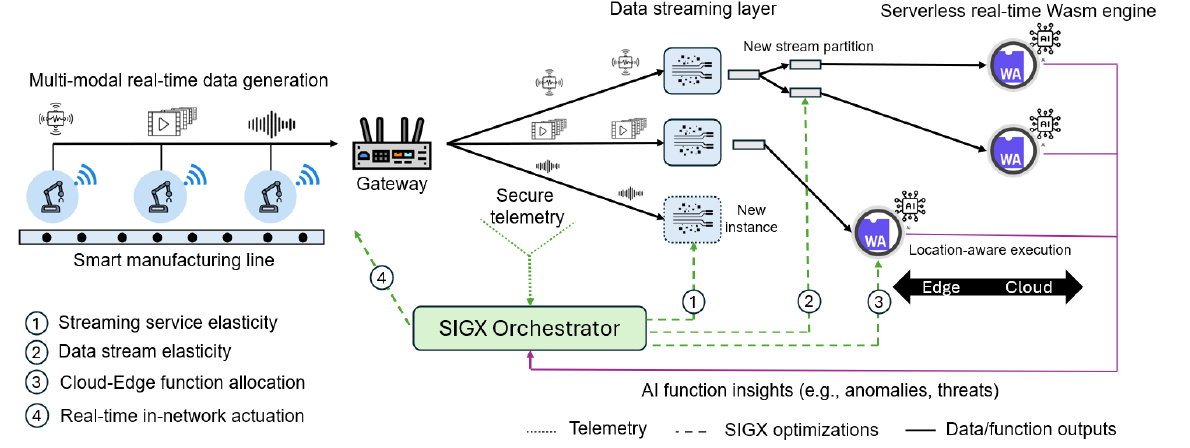
Synthetic cobot workloads and open datasets will emulate factory conditions informed by Dell’s manufacturing environment.
Elastic streaming, lightweight AI execution and network-aware orchestration in laboratory conditions.
DEMONSTRATION 02
Matching connectivity to application needs
Advanced driver-assistance systems need timely perception and situational information as vehicles move and network conditions change. SIXG will investigate edge AI, distributed processing and application-specific connectivity.
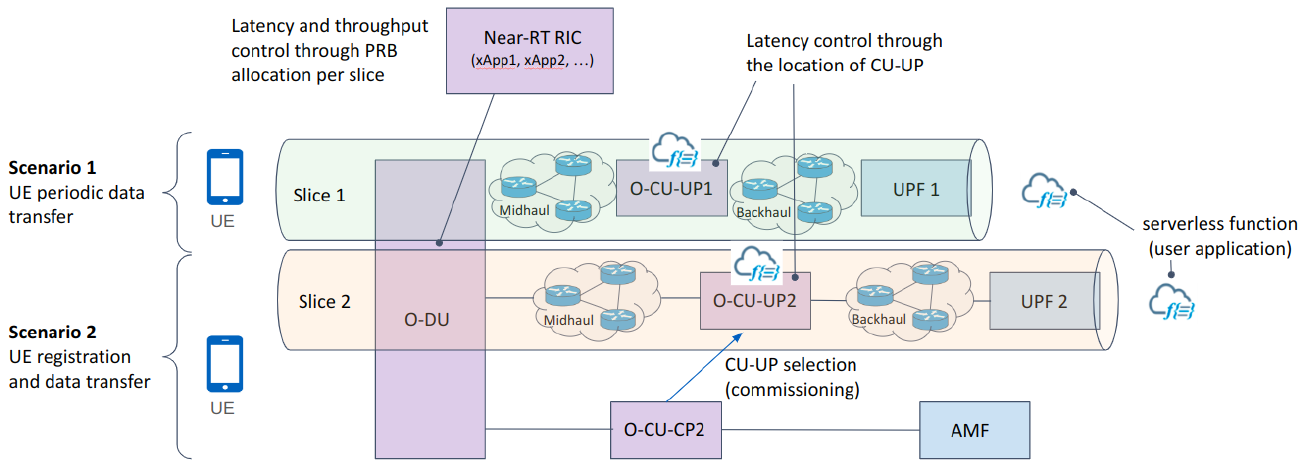
A controlled ADAS scenario will exercise on-demand network slicing and its adaptation to application requirements.
Trade-offs between slice setup time, resource efficiency and responsiveness.
DEMONSTRATION 03
Keeping services available as conditions change
When an edge node is overloaded or unavailable, workloads may need to move. SIXG will investigate how programmable traffic steering, rapid function startup and state management can support service migration.
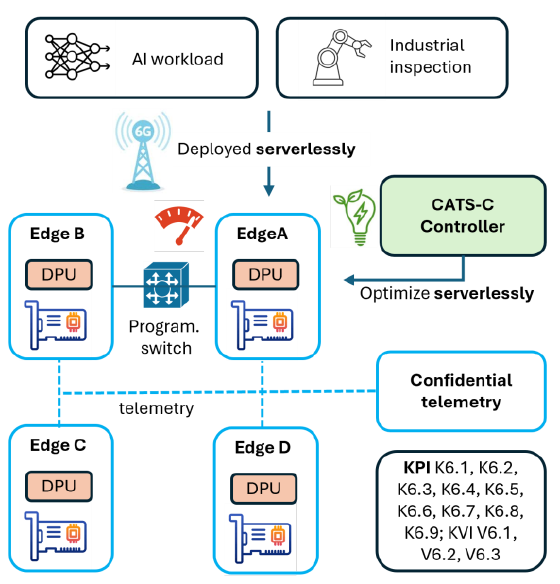
A multi-node edge setup will combine programmable networking with protected telemetry and serverless execution.
Migration of stateless and stateful services, together with coordination of distributed AI workloads.
These are planned experiments described in the SIXG proposal. Results will be shared as validation progresses.