SIXG brings software and programmable network infrastructure together through a shared control and learning plane. Five research pillars contribute to a framework for real-time serverless computing across devices, edge infrastructure and the cloud.
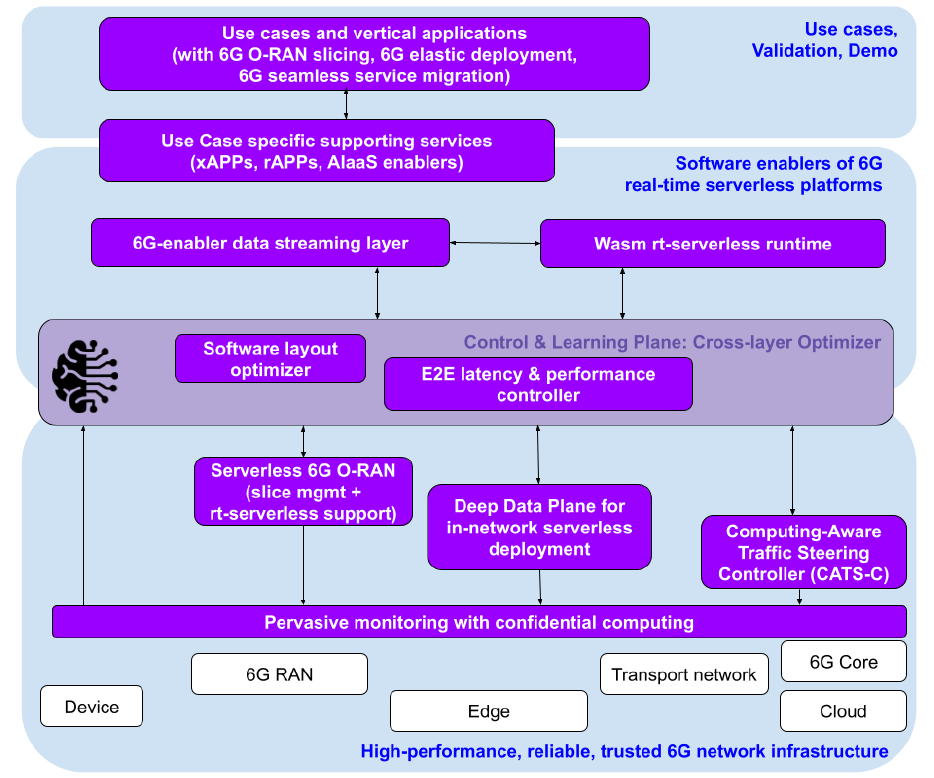
Select a pillar to explore its role and technical diagram.
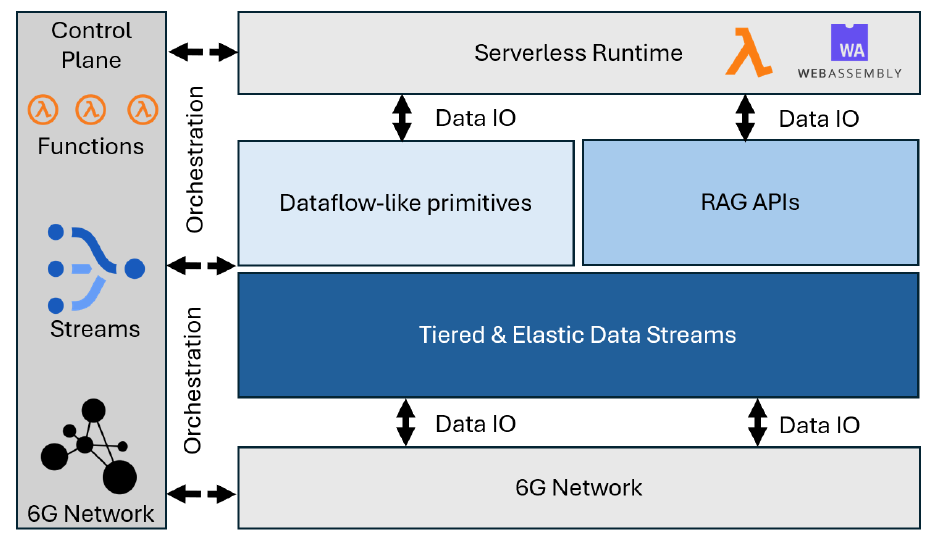
Data that adapts with the workload
SIXG will investigate streaming storage for ingestion, transformations, communication between functions and consistent state. Streaming-oriented retrieval and vector search will also support AI workflows such as retrieval-augmented generation.
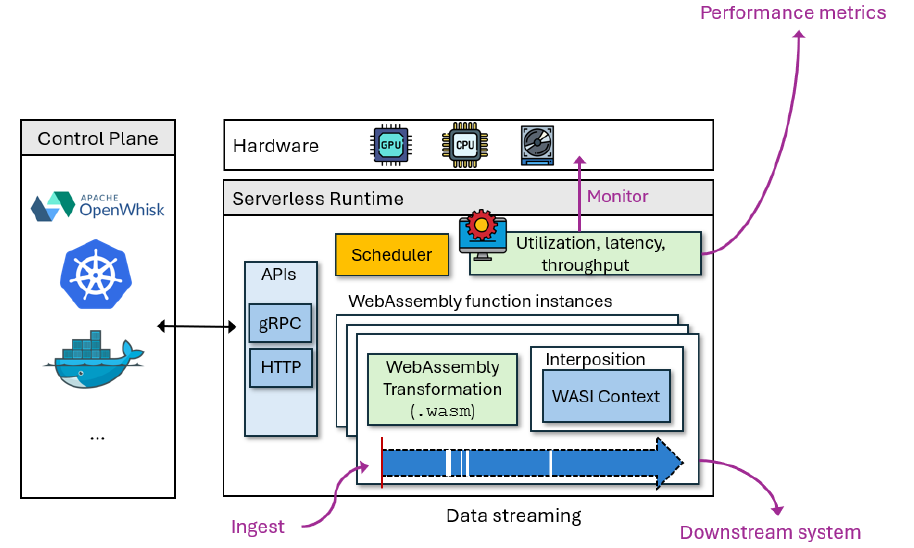
Responsive execution across the edge
The runtime will aim to reduce startup delay and memory requirements for real-time processing and AI inference. It will extend input/output capabilities so existing Wasm binaries can use new storage and networking functions, while integration with streaming storage brings computation closer to data.
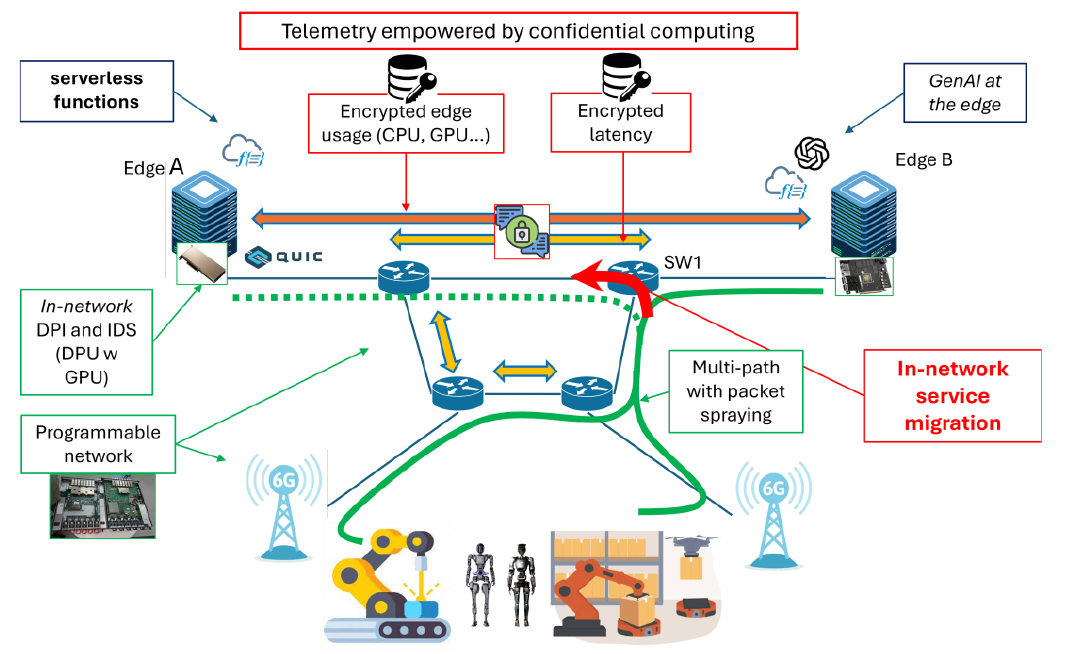
Network-aware service placement
The Deep Data Plane will investigate how programmable switches and data processing units can redirect workloads when edge resources become congested or unavailable. Research into functional and homomorphic encryption will explore using infrastructure measurements while protecting the underlying data.
Connectivity tailored to applications
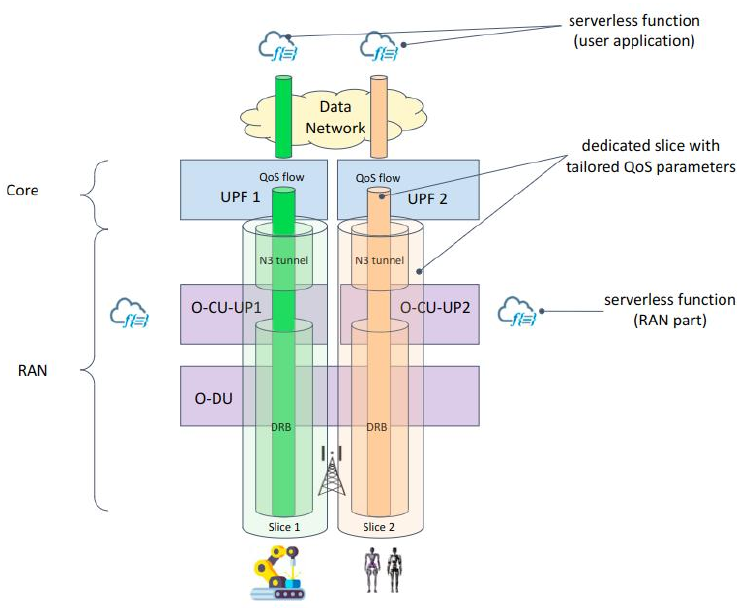
SIXG will explore network slices matched to application latency and throughput requirements. Selected radio access network functions will be instantiated when needed and released when idle, with the aim of reducing resources consumed by permanently provisioned components.
Coordinated decisions from software to network
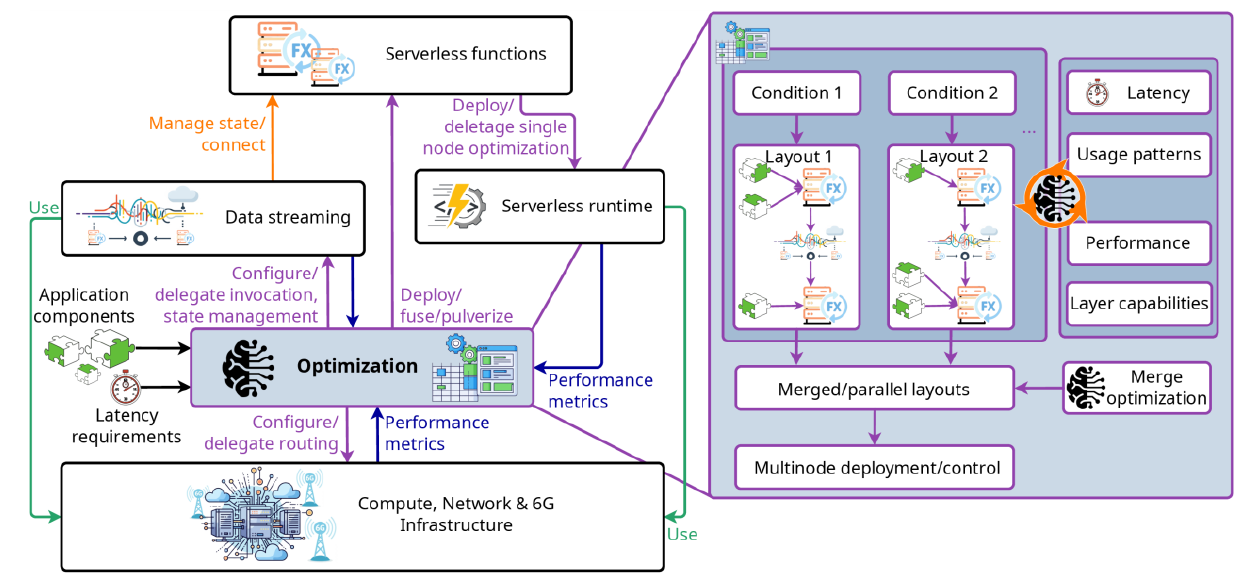
An AI-driven controller will use measurements from applications, data streams, the runtime and infrastructure to adapt function grouping, placement and resource allocation. Computing-aware traffic steering will consider both network and compute conditions when routing requests.
The technologies described here are research plans. Their integration and performance will be evaluated through controlled laboratory demonstrations in manufacturing, ADAS and service migration.